
What Birth Mothers Need to Know About Open Adoption Agreements
Victoria Slappy has had an abortion, lost contact with a son she placed in a closed-turned adoption, and built a thriving open adoption with a family she now calls her own. She is also a mother of five girls, a caregiver to her great-grandmother with dementia, and a woman who will tell you exactly what each of those experiences cost her. Her episode on Choosing Adoption puts all of it on the table with a directness that statistics and policy debates cannot touch.
Victoria is a mother of five girls in Ohio. When she discovered an unexpected sixth pregnancy, she knew immediately that parenting another child was not something she could take on. She was already caring for her great-grandmother, who has severe dementia, alongside her three-year-old, her ten-year-old, and her two teenagers. Her older daughters helped with nearly everything. The financial, emotional, and logistical math did not add up. But she also knew she would not have an abortion. She had done that once, at sixteen, and the experience left a mark that two decades could not erase.
The Weight of a Decision Made Too Young
Victoria was a teenager when family members encouraged her to end her first pregnancy. She expected the process to be simple. Instead, it sent her into an emotional depression that persisted for years. She still counts that child's birthday. She still wonders about him or her. The experience gave her a boundary she would not cross again, and when she found herself pregnant in her thirties, adoption became the path that honored both her limits and her values. Research from the National Adoption Council confirms that birth mothers who participate in selecting the adoptive family and maintain ongoing contact report significantly higher satisfaction and lower levels of grief compared to those with no involvement in the process (National Adoption Council).
What Went Wrong the First Time
Victoria's first adoption, in 2017, ended in devastation. She and the adoptive family agreed to an open arrangement. After six months, the family said she was overbearing, cut all contact, and took legal steps to ensure she could not reconnect. Victoria describes the period that followed as severe depression. She had already endured trauma surrounding the pregnancy itself, and the loss of contact compounded it. She tried to reclaim her rights and discovered that in Ohio, open adoption agreements function as moral contracts with no legal teeth. Roughly half of U.S. states have laws that make open adoption agreements enforceable in some form, while the other half either prohibit enforcement or have no laws on the books at all (American Adoptions). Victoria learned this the hard way.
An Agency That Matched Her Fears With Safeguards
When Victoria contacted Heart to Heart Adoptions for her second placement, she led with her biggest concern: she could not survive another closed adoption disguised as an open one. The agency told her they do not accept adoptive families who are unwilling to maintain openness. That single policy shift changed her willingness to try again. The agency also connected her with Hearts Connect, a platform that provides mediated support between birth and adoptive families during the fragile early months. Research published in the journal Adoption Quarterly through the Minnesota/Texas Adoption Research Project found that families with ongoing face-to-face contact reported the highest satisfaction levels across all members of the adoption triad, including birth mothers, adoptive parents, and adolescents (PMC/NIH). A neutral support person during the transition can prevent the kind of communication breakdown Victoria experienced in her first placement.
Choosing a Family Across Racial Lines
Victoria initially preferred a Black couple for her son. The options were limited. She looked through magazines, reviewed agency profiles, and nothing felt right until one couple checked every box she did not even know she had. They were dancers, Christians, and culturally connected to the Black community in their daily lives. They had Black friends in their inner circle. They committed to keeping her son grounded in his cultural identity. And most importantly, they approached her with zero pretense. A literature review published in The Counseling Psychologist found that transracial adoptees tend to be psychologically well-adjusted when adoptive families engage in intentional cultural socialization practices, including maintaining diverse social networks and having open conversations about race (PMC/NIH). Victoria recognized those qualities before ever reading a study. She felt it in the first phone call and canceled her second interview on the spot.
The Hospital Room That Confirmed Everything
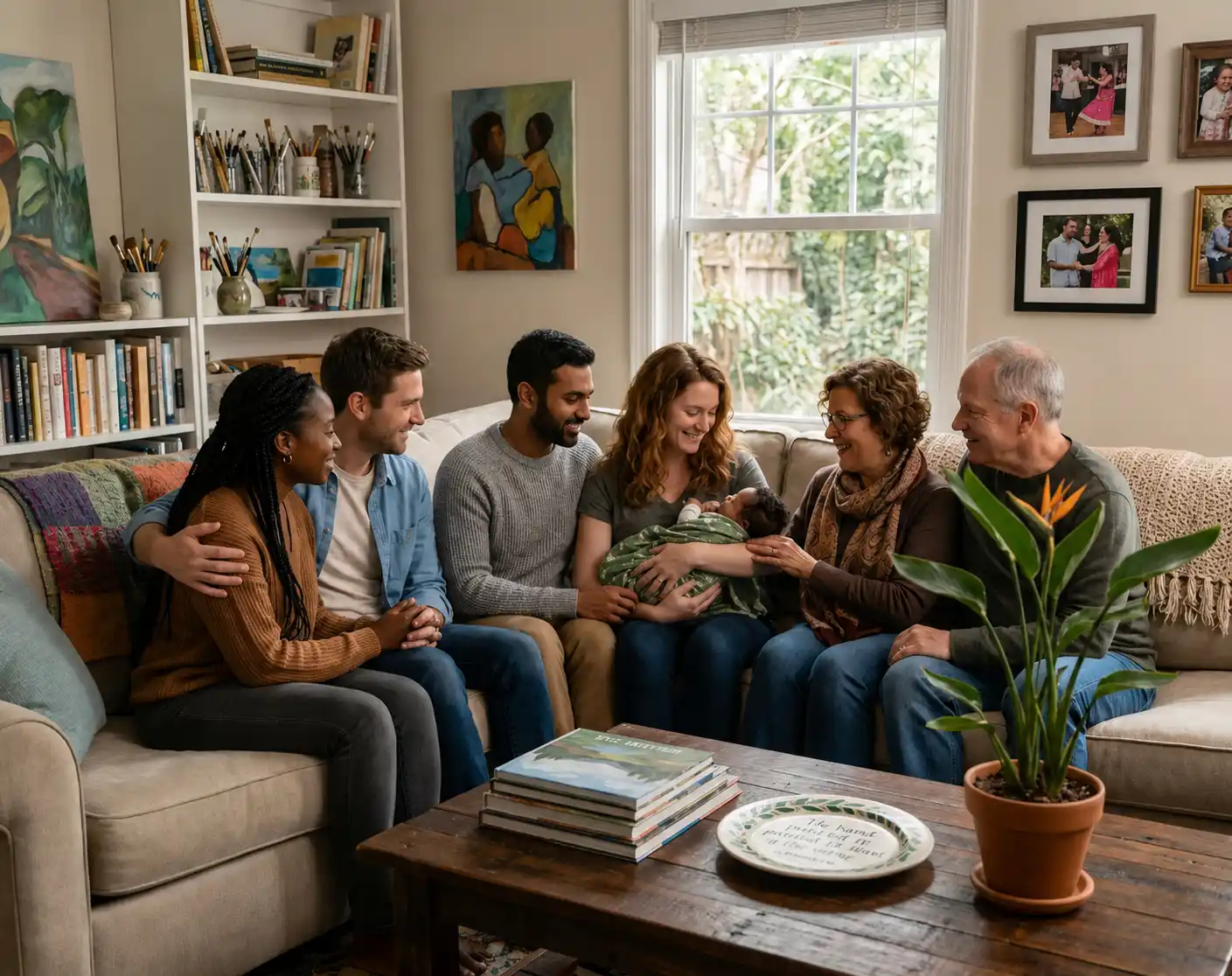
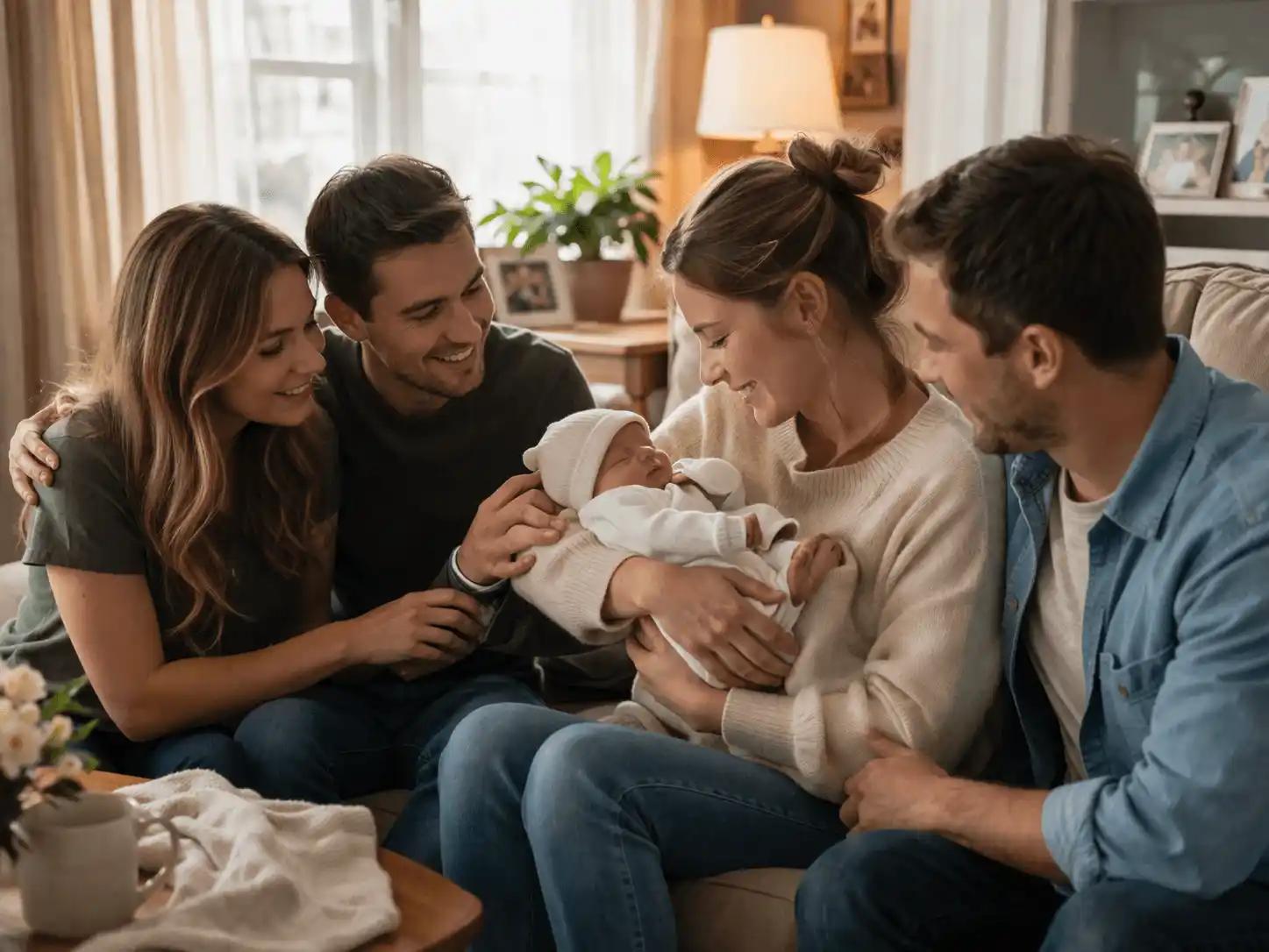
Victoria's delivery experience became the final confirmation. The adoptive mother, Fauna, held her hand and one leg during delivery while Victoria's best friend held the other. The adoptive father walked a mile to a Wendy's at midnight after a DoorDash order never arrived. They brought push gifts, including a hand-painted canvas featuring Victoria's favorite Bible verse, one they had asked about months earlier. They slept in adjoining hospital rooms. When the baby cried at night, Fauna jumped up so Victoria could rest. Victoria's best friend, who had arrived skeptical and protective, left the room in tears saying she was comfortable and that Victoria had picked a good family. A study of 51 birth mothers published in the American Journal of Orthopsychiatry found that emotional and practical support during the hospital experience was one of the strongest predictors of positive postplacement adjustment (University of Kentucky/AJO).
The Moral Contract Every Birth Parent Should Understand
Victoria delivers a warning that every expectant parent considering adoption needs to hear. Open adoption agreements, in most states, are moral contracts. They are not custody arrangements. They do not grant visitation rights. If the adoptive family stops honoring the agreement, the birth parent's legal options range from limited to nonexistent, depending on the state. Victoria says it plainly: be absolutely sure before you sign, because the blood connection ends the moment the paperwork is complete. The American Bar Association notes that while an increasing number of states are creating statutory frameworks for enforceable post-adoption contact agreements, many still rely on informal, non-binding arrangements that leave birth parents without legal recourse (American Bar Association).
Definitions
Open adoption: An adoption arrangement that includes planned, ongoing contact between the birth family and the adoptive family. Contact can range from letters and photos to video calls and in-person visits, and the terms are typically agreed upon before placement.
Closed adoption: An adoption in which no identifying information is shared between birth and adoptive families, and no contact occurs after finalization. Birth records are sealed.
Post-Adoption Contact Agreement (PACA): A written agreement between birth and adoptive parents specifying the type and frequency of contact after adoption finalization. Enforceability varies by state.
Transracial adoption: An adoption in which the child is placed with parents of a different race or ethnicity. Approximately 28% of all U.S. adoptions are transracial placements.
Cultural socialization: The intentional practices adoptive parents use to connect their child with the child's racial, ethnic, and cultural heritage, including maintaining diverse friendships, participating in cultural activities, and having direct conversations about race and identity.
Hearts Connect: A communication platform used by Heart to Heart Adoptions to provide mediated support between birth parents and adoptive families, especially during the early postplacement period when emotions and expectations can create friction.
Listen to Victoria's full story on Choosing Adoption with host Donna Pope, and hear the message she recorded for her son to find when he is ready. Download Your Free Introductory Adoption Guide at ChoosingAdoption.com.
#Adoption #OpenAdoption #ClosedAdoption #BirthMom #BirthMotherStory #ChoosingAdoption #AdoptionPlan #TransracialAdoption #AdoptionJourney #AdoptionStory #BirthParent #AdoptiveFamily #AdoptionSupport #HeartToHeartAdoptions #AdoptionAdvice #AdoptionAwareness #ProLife #AdoptionVsAbortion #BirthMotherHealing #OpenAdoptionAgreement
Follow or Subscribe to Choosing Adoption on your favorite platforms:
Website | YouTube | Twitter/X | Instagram
Follow Donna Pope (LinkedIn)



Comments