
A Birth Mother's Strategy for Keeping Siblings Together Through Open Adoption
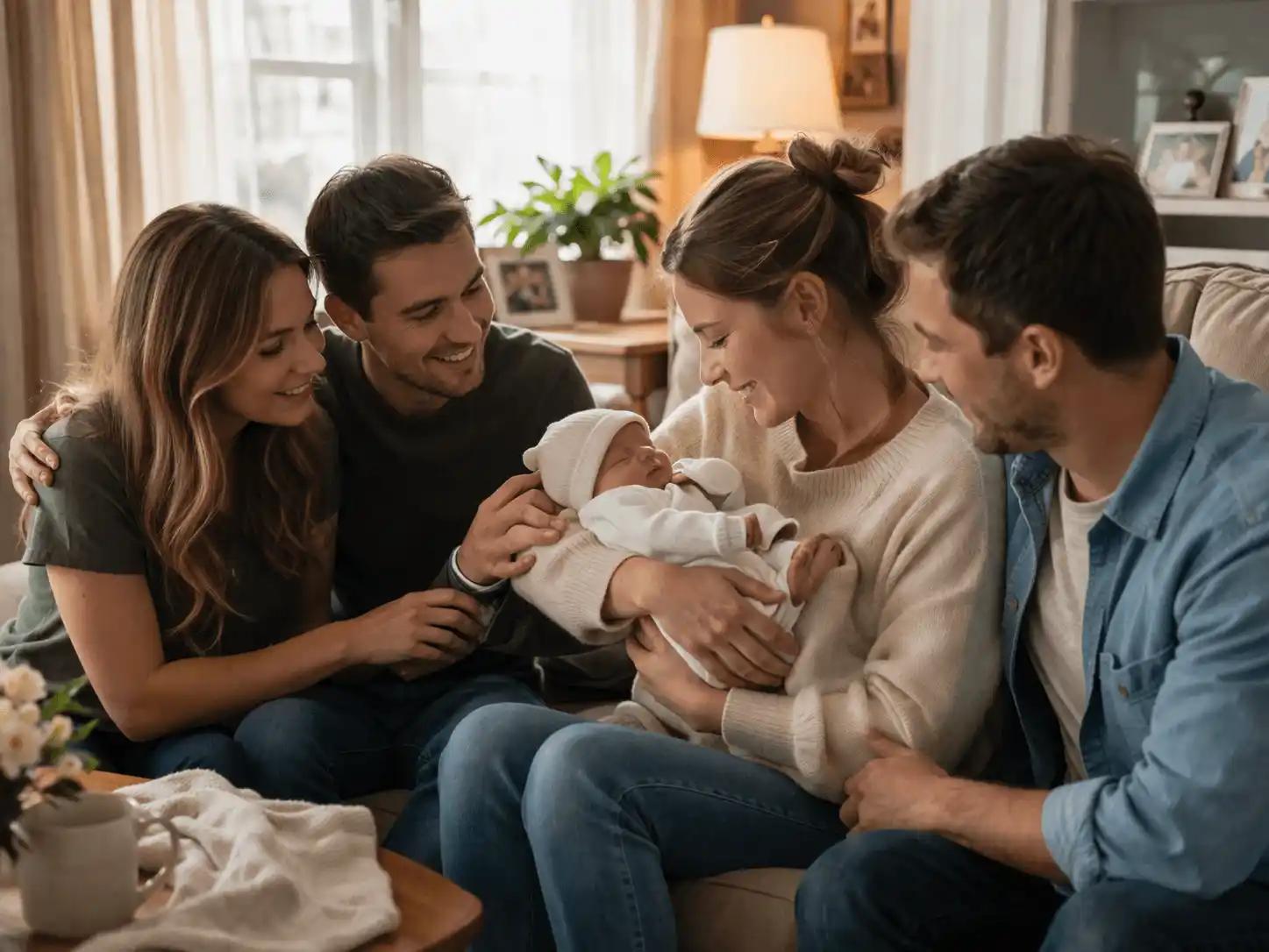
Eight children. Three lost to foster care. Two abused in state placements. And one mother who decided the system would never choose for her family again. In this episode of Choosing Adoption with host Donna Pope, birth parents Malena and Chuck share how they navigated CPS involvement, foster care trauma, and a life-threatening pregnancy to place two sons with the same adoptive family through Heart to Heart Adoptions. Their conversation reveals what happens when birth parents refuse to be passive participants in their children's futures and instead take the lead in building the family their sons deserve.
Malena and Chuck were together seven years when they sat down with Donna. Between them, they have eight boys and one girl. Three of their oldest were removed by CPS. Two were adopted by relatives who moved out of state. One was taken at birth and placed with a foster family Malena never chose. The twins went to a trusted friend. And the last two, their seventh and eighth sons, were placed through Heart to Heart Adoptions with the same family because this time Malena and Chuck got to choose.
She Asked for Help and CPS Showed Up Instead
Malena was a young mother whose food stamps were cut off. She went online asking for help, and what came back were CPS calls from people reporting that she had no food in the house. She was not accused of abuse. She was not found to have harmed her children. She was poor, and the system treated poverty like neglect. Her two oldest sons were removed and placed into foster care, and for three and a half years Malena completed every service the state demanded, including substance abuse counseling she was never recommended for.
According to 2024 AFCARS data, neglect accounts for 55% of all foster care placements in the United States, and child maltreatment rates for families in poverty are five times higher than for families of higher socioeconomic status (Christian Alliance for Orphans). The Annie E. Casey Foundation reports that approximately 542,900 children were confirmed victims of maltreatment in 2023, with three out of four experiencing neglect as the primary form (Annie E. Casey Foundation). Malena's story fits squarely within those numbers. The system designed to protect children pulled hers out of a home where they were loved and placed them somewhere they were not safe.
The Abuse That Changed Everything
Two of Malena's sons were physically and mentally abused while in foster care. CPS confirmed it happened. No one was held accountable. The foster parents responsible continued caring for other children. Her boys came out of the system on medication, changed in ways that only a mother watching her children unravel would recognize. They went in as strong little boys and came back broken. That experience became the engine behind every adoption decision Malena made after that point.
A study from the University of Illinois found that in non-relative foster family homes, foster parents were the perpetrators in 56% of substantiated abuse cases (University of Illinois Child and Family Research Center). The 2024 AFCARS report shows that 15,379 youth aged out of foster care that year with no permanent family at all (National Council For Adoption). Malena was determined that none of her remaining children would become part of those statistics. She was not choosing adoption because she did not want her kids. She was choosing adoption because she had seen what happened when the state chose for her.
Fighting Too Long and Losing Her Rights
When Malena became pregnant with her third son, CPS promised she could keep him. She built the crib herself at nine months pregnant. She completed every service. Then they showed up at the hospital and took him at birth. She kept fighting in court, refusing to surrender, and the system used her persistence against her. Under the federal Adoption and Safe Families Act, states must file for termination of parental rights when a child has been in foster care for 15 of the most recent 22 months. Malena's lawyer told her afterward that if she had given up sooner, she would have kept her parental rights until her son turned 18. Because she refused to quit, the court labeled her negligent.
That contradiction sits at the center of an ongoing national debate about the ASFA timeline. The law was intended to move children into permanent homes faster, but critics argue it punishes parents who need more time to meet court-ordered requirements, particularly parents in poverty or parents who were never given adequate services in the first place. For Malena, the lesson was clear. The system was not designed to reunify her family. If she wanted to protect her remaining children, she would have to do it herself.
Choosing the Family Herself
When Malena became pregnant with twins, she placed them with a trusted friend who had been her older boys' foster mother and who had once nearly been held in contempt of court for standing up to a judge on Malena's behalf. That woman became the twins' adoptive mother. But when Malena became pregnant again, she and Chuck wanted something more structured. They wanted an agency that would let them choose the family and stay connected after placement. They contacted Heart to Heart Adoptions and reviewed family profiles until they found one that stood out.
The deciding factor was simple. This family's profile emphasized keeping birth parents involved in the child's life. Malena had already experienced what happens when relatives adopt your children and move across state lines. She had experienced what happens when friends adopt and then ignore your preferences. With this adoptive family, she felt heard. The Minnesota/Texas Adoption Research Project found that adoptive families with ongoing contact reported the highest satisfaction levels, while families with no contact or stopped contact reported the lowest (National Institutes of Health). Roughly 95% of all private infant adoptions in the United States now include some level of openness. Malena was not following a trend. She was protecting herself and her son.
Keeping Brothers Together
When Malena became pregnant with her eighth child, she and Chuck did not hesitate. They asked the same adoptive family to take him, keeping the brothers together in the same home. The family said yes. That decision became even more significant when Malena's pregnancy turned into a medical emergency. She went to the hospital with severe gallbladder pain, and within 15 minutes, her oxygen dropped to dangerous levels. She was placed on ECMO, a life-support system that oxygenates blood outside the body, and spent days in the ICU hallucinating from medication reactions and waking up in rooms she did not recognize.
Her baby was delivered by emergency cesarean at approximately 22 weeks, five months before his due date. Preeclampsia complicates 6 to 10% of all pregnancies in the United States and accounts for roughly 15.9% of all maternal deaths in the country (National Institutes of Health). Through all of it, the adoption plan held. The family Malena and Chuck had chosen was willing to take on a child born at extreme prematurity with unknown developmental outcomes. That willingness, Malena says, confirmed everything she already believed about them.
Staying Connected Through Open Adoption
Today, Malena and Chuck receive monthly photos and updates of their seventh son through the Our Hearts Connect platform, a secure communication tool used by Heart to Heart Adoptions to facilitate ongoing contact between birth families and adoptive families. The adoptive family recently brought their son to visit at the hospital where the newborn is still growing in the NICU. They made the trip on their own, without being asked. Malena says that visit meant more to her than anything she has received from the family members who adopted her older children.
Chuck describes the adoptive family in simple terms. He gets along with them. He likes the pictures. He loves seeing his son grow. For a couple who spent years watching the system make decisions about their children without their input, the ability to open an app and see their boy thriving is not a small thing. It is the thing. It is what open adoption gave them that foster care never did: a window into their child's life that nobody can shut.
What Parents Should Know
Malena's advice to parents facing a similar crossroads is direct. Put your children first. Your feelings come last. If you can find someone who loves your children as much as you do, that is the biggest blessing in the world. She and Chuck are honest about their financial reality. They cannot provide the life their sons now have, and rather than resent that, they take comfort in knowing their boys are healthy, loved, and given opportunities they could not offer on their own.
Chuck's advice is equally straightforward. Know your rights. Do not let CPS into your house without proper documentation. Get good legal representation, even if you have to fight to find it. And if the system is not working for your family, look for another way. For Malena and Chuck, that other way was open adoption through an agency that let them choose the family, stay connected after placement, and keep their sons together. Their message is simple. Do not give up on your kids. Just make sure the path you choose actually leads somewhere good.
This episode of Choosing Adoption shows what becomes possible when birth parents take the lead in building their child's future. Two brothers will grow up in the same home, with adoptive parents who chose to stay connected and birth parents who chose to trust them. Subscribe for more stories that show open adoption creating families instead of separating them.
#ChoosingAdoption #BirthParentStory #OpenAdoption #FosterCare #CPSReform #SiblingAdoption#AdoptionAdvocacy #HeartToHeartAdoptions #BirthParentRights #FosterCareReform #OurHeartsConnect #PreeclampsiaSurvivor #NICUBaby #AdoptionPodcast #RealAdoptionStories #BirthParentPerspective #AdoptionJourney
Follow or Subscribe to Choosing Adoption on your favorite platforms:
Website | YouTube | Twitter/X | Instagram
Follow Donna Pope - LinkedIn
Follow Melana - KraziikittiAkaViolentK (Facebook) | @LanaKraziikitti (TikTok)



Comments